


Don’t Ignore the Pain—Early Treatment Can Help You Stay Active
Most aches and pains improve with rest, but some symptoms shouldn’t be ignored. Whether you’re dealing with a lingering sports injury, arthritis, back pain, or discomfort that keeps returning, knowing when to see an orthopedic specialist can help prevent further damage and get you back to the activities you enjoy.
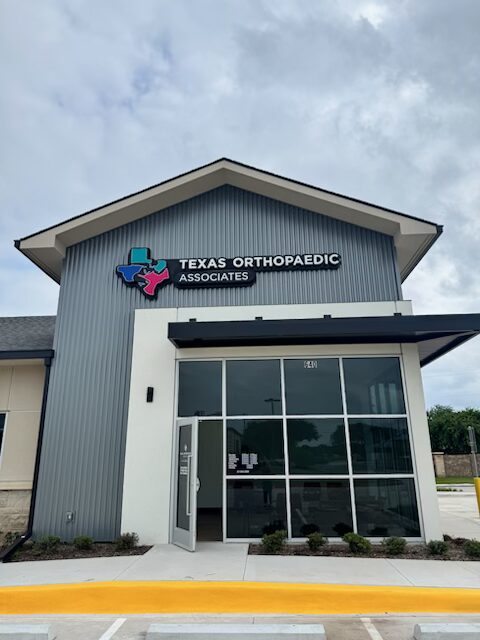
At Texas Orthopaedic Associates, our experienced orthopedic surgeons and sports medicine physicians care for patients throughout Dallas, Fort Worth, Plano, Keller, and Weatherford. From conservative treatments to advanced surgical care, we’re here to help you move comfortably again.
Here are 10 signs it may be time to schedule an appointment with an orthopedic specialist.
1. Your Pain Lasts Longer Than a Week
Minor muscle soreness usually improves within a few days. If your pain continues for more than a week despite rest, ice, or over-the-counter medications, it may indicate an injury that requires professional evaluation.
Persistent pain can be caused by:
- Arthritis
- Tendon injuries
- Ligament tears
- Cartilage damage
- Stress fractures
The sooner the problem is identified, the sooner treatment can begin.
2. You Have Swelling That Won’t Go Away
Swelling is your body’s natural response to injury, but it shouldn’t linger indefinitely.
Persistent swelling may signal:
- Torn ligaments
- Meniscus injuries
- Joint inflammation
- Fractures
- Tendon injuries
If swelling continues for several days or repeatedly returns after activity, it’s time to have it evaluated.
3. You’re Losing Range of Motion
Can you no longer lift your arm overhead?
Does your knee feel stiff when climbing stairs?
Is it difficult to bend over or rotate your neck?
A loss of flexibility or movement often indicates an underlying orthopedic condition that can worsen if left untreated.
4. Your Joint Feels Unstable
A knee that “gives out,” an ankle that repeatedly rolls, or a shoulder that feels like it might slip out of place are all signs of joint instability.
These symptoms may indicate:
- ACL injuries
- Ligament tears
- Shoulder instability
- Chronic ankle instability
Ignoring instability increases your risk of more serious injury.
5. You’re Experiencing Numbness or Tingling
Pain isn’t the only symptom to watch for.
Numbness, tingling, burning sensations, or weakness in your arms or legs may indicate nerve compression caused by conditions such as:
- Herniated discs
- Carpal tunnel syndrome
- Cubital tunnel syndrome
- Sciatica
- Cervical spine disorders
These symptoms should be evaluated promptly, especially if they continue or worsen.
6. Pain Is Keeping You Awake at Night
Occasional discomfort after a long day is common.
However, pain that consistently wakes you up or prevents you from sleeping may be a sign of:
- Rotator cuff tears
- Advanced arthritis
- Tendon injuries
- Bursitis
- Certain spine conditions
Sleep is essential for healing, and persistent nighttime pain deserves medical attention.
7. You Can’t Do the Activities You Love
Have you stopped golfing?
Avoiding pickleball?
Skipping walks around the neighborhood?
Passing on gardening?
If pain is changing your lifestyle, it’s time to seek treatment. Many orthopedic conditions can be successfully managed without surgery, allowing patients to remain active.
8. Your Injury Happened During Sports or Exercise
Sports injuries aren’t always dramatic.
Sometimes the pain begins gradually after:
- Running
- Tennis
- Pickleball
- Golf
- Weightlifting
- Youth sports
Early evaluation can prevent small injuries from becoming much larger problems.
9. Over-the-Counter Treatments Aren’t Helping
If you’ve already tried:
- Rest
- Ice
- Compression
- Elevation (RICE)
- Anti-inflammatory medications
- Activity modification
…and your symptoms continue, it’s time to see an orthopedic specialist.
Our physicians offer many non-surgical treatment options, including physical therapy, injections, bracing, and regenerative medicine when appropriate.
10. You’re Wondering if Surgery Is Your Only Option
Many people delay seeing an orthopedic specialist because they assume surgery is inevitable.
The truth is that surgery is often not the first recommendation.
At Texas Orthopaedic Associates, we begin with conservative treatments whenever appropriate. Our goal is to relieve pain, improve function, and help you return to your normal activities using the least invasive treatment possible.
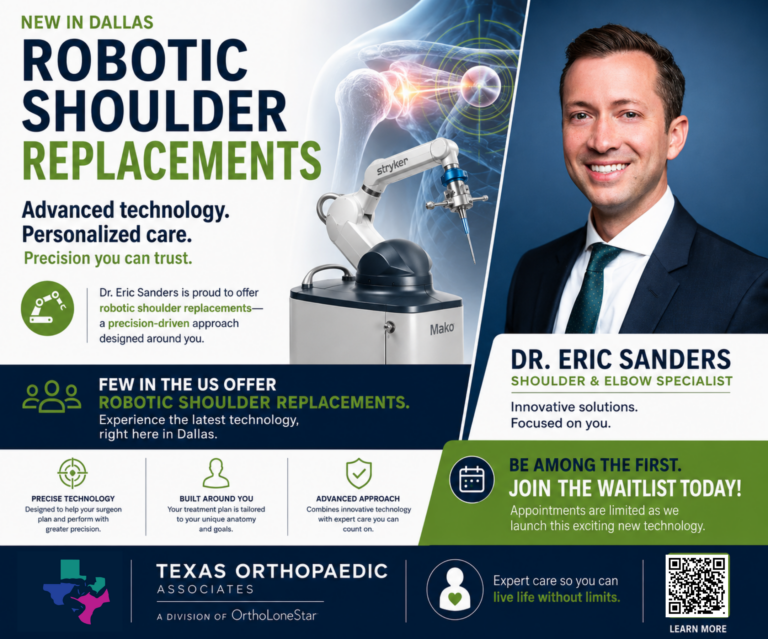
If surgery is needed, our orthopedic surgeons offer advanced techniques, including minimally invasive and robotic-assisted procedures for many conditions.
When Should You Schedule an Appointment?
If you’re experiencing persistent joint pain, back pain, sports injuries, or limited mobility, don’t wait until the problem becomes more serious.
Early diagnosis often means:
- Faster recovery
- More treatment options
- Less pain
- Better long-term outcomes
- A greater chance of avoiding surgery
Comprehensive Orthopedic Care Across Dallas-Fort Worth
Texas Orthopaedic Associates provides comprehensive orthopedic care for patients of all ages, from young athletes to active adults and seniors.
Our specialties include:
- Sports Medicine
- Joint Replacement
- Spine Care
- Shoulder & Elbow
- Hip & Knee
- Hand & Wrist
- Foot & Ankle
- Physical Medicine & Rehabilitation
- Physical Therapy
- Fracture Care
With convenient locations in Dallas, Fort Worth, Plano, Keller, and Weatherford, expert orthopedic care is never far away.
Schedule an Appointment Today
You don’t have to live with pain.
Whether you’ve recently suffered an injury or have been dealing with symptoms for months, the team at Texas Orthopaedic Associates can help you find the right treatment plan.
Take the first step toward moving better by scheduling an appointment with one of our orthopedic specialists today.