

Shoulder replacement surgery is a highly individualized procedure. Every patient’s shoulder anatomy, degree of arthritis, bone wear, rotator cuff function, and functional goals are different. My goal is to combine experienced surgical judgment with advanced technology to plan and perform each shoulder replacement as precisely and consistently as possible.
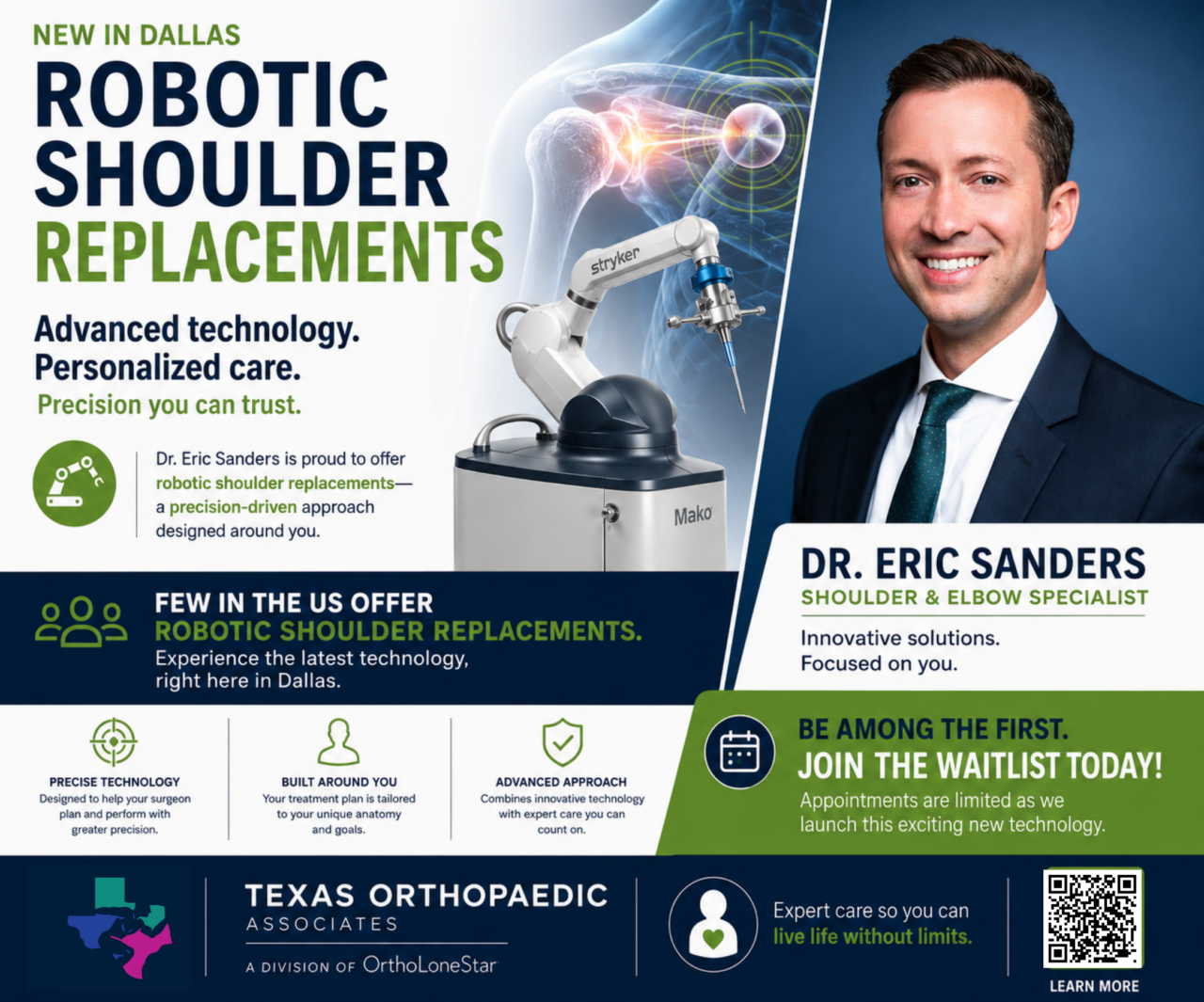
I am pleased to offer robotic-assisted shoulder arthroplasty using a robotic workflow paired with the Tornier Perform shoulder replacement system.
What Does Robotic Assistance Do?
Robotic assistance begins with detailed preoperative CT-based planning. Before surgery, I evaluate the patient’s three-dimensional shoulder anatomy and develop a plan for implant size, position, orientation, and fixation.
During surgery, the robotic system helps me execute that individualized plan with a high degree of consistency. It provides real-time guidance and controlled bone preparation, particularly on the glenoid—the socket side of the shoulder joint. This can be especially valuable when arthritis has caused bone loss or deformity.
Robotic assistance does not replace the surgeon. I remain in control throughout the procedure, including the surgical exposure, protection of nerves and soft tissues, implant selection, and all critical decisions. The robot is a precision tool that helps carry out the plan I create. 1
Why Precise Implant Placement Matters
In shoulder replacement surgery, component position matters. Accurate placement of the glenoid component and restoration of the shoulder’s mechanics are important for joint stability, range of motion, fixation, and long-term implant performance.
Robotic-assisted preparation is designed to improve the consistency with which the surgical plan is performed. In a laboratory study comparing manual preparation, patient-specific guides, and robotic arm assistance, robotic preparation more closely matched the preoperative plan for glenoid version, inclination, position, and depth of reaming.
This technology is particularly helpful in reducing positioning “outliers”—instances where an implant ends up farther from the intended plan than desired. However, precise radiographic placement does not guarantee a particular outcome for every patient. Long-term clinical data for robotic shoulder arthroplasty are still developing, and each patient’s recovery is influenced by many factors beyond implant position.
A Proven Implant Platform: Tornier Perform
Technology is only one part of a successful shoulder replacement. Implant design and surgeon familiarity are equally important.
The Tornier Perform platform is a time-proven shoulder arthroplasty system that has been used in thousands of shoulder replacements. I have personally used this implant system in hundreds of shoulder arthroplasties. That experience matters: it allows me to understand the implant options, the nuances of shoulder anatomy, and how to tailor reconstruction to the individual patient.
Robotic assistance adds another level of planning and execution to an implant platform with which I have extensive experience.
Experience and Volume Still Matter
A robot is not a substitute for surgeon experience, clinical judgment, or surgical volume.
There is no single universally accepted number of shoulder replacements that defines surgeon proficiency. Surgical competence is multifactorial and includes fellowship training, operative judgment, technical skill, complication management, consistent outcomes, and ongoing experience—not simply a case count.
That said, research consistently supports the importance of surgeon volume in shoulder arthroplasty. A systematic review found that surgeons performing fewer than 25 shoulder arthroplasties per year had longer operative times, higher in-hospital complication rates, longer hospital stays, and higher costs than higher-volume surgeons.
As a high-volume shoulder arthroplasty surgeon, I bring years of dedicated training and practice to every operation. The robotic platform does not replace the safe, efficient surgical dissection and careful soft-tissue handling I have developed over years of specialized shoulder practice. Instead, it amplifies my ability to execute a detailed plan with precision and consistency.
The Best of Both: Judgment, Technique, and Technology
Robotic-assisted shoulder replacement is not about allowing technology to take over surgery. It is about combining:
• Careful preoperative planning based on your anatomy
• A proven Tornier Perform implant platform
• Consistent, precise execution of implant placement
• The judgment and technical skill of an experienced, high-volume shoulder arthroplasty surgeon
• Meticulous attention to soft tissues, stability, and safe surgical technique
For appropriately selected patients, this combination offers a modern, thoughtful approach to shoulder replacement surgery—one that pairs established surgical expertise with tools designed to enhance precision.
Learn More about Dr. Eric Sanders or click to schedule an appointment.